

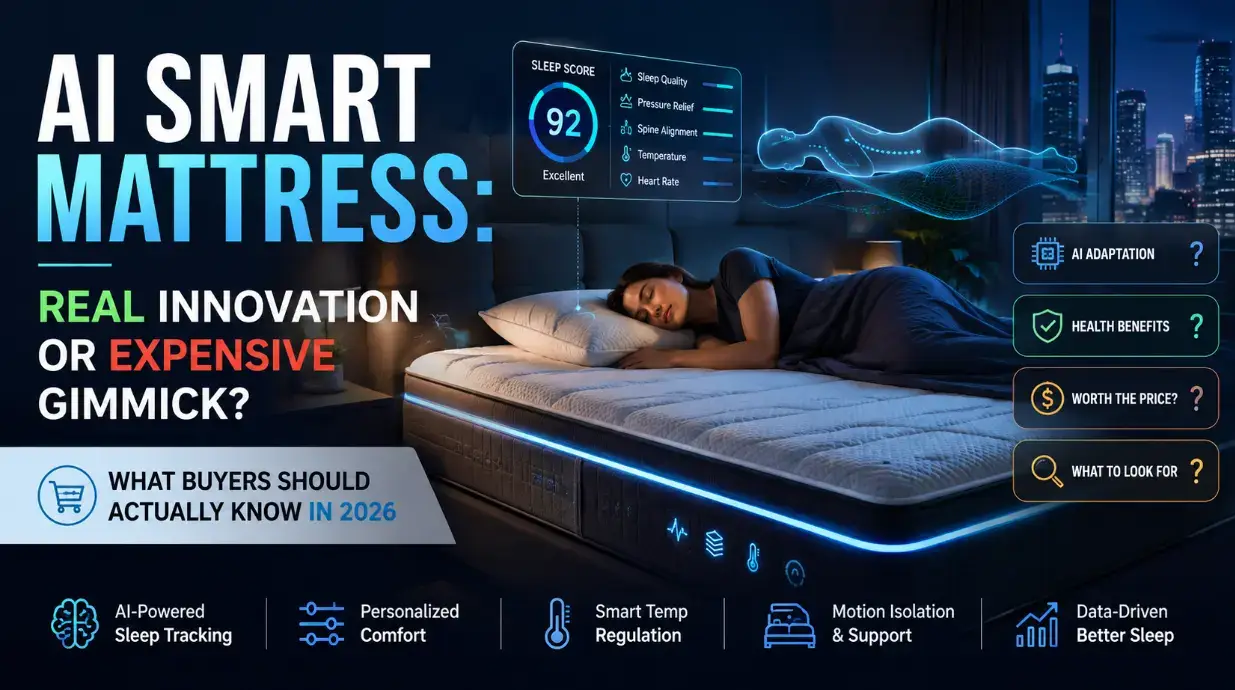
Lately, seven out of ten inquiries we receive at our factory ask the same question: "Do you manufacture AI smart mattresses?" Honestly, this shift happened faster than we expected. Three years ago, customers were debating between spring or latex mattresses. Now they immediately ask about heart rate monitoring and automatic temperature adjustment.
The reason behind this isn't hard to understand. The pandemic years kept everyone home, making sleep issues painfully obvious. Last year we produced an OEM batch of smart mattresses, and the brand's data showed users check their sleep monitoring app 3-5 times daily on average. That's more frequent than most fitness apps.
But what we see on our production line sometimes looks quite different from the "future technology" described in marketing materials.
We've tracked the purchase motivations of hundreds of customers and found their concerns are actually very specific:
People with poor sleep quality want to know exactly where things are going wrong—is the mattress too firm? Room temperature off? Too much tossing and turning? Traditional mattresses can't provide answers, while AI mattresses appear to visualize this data.
Those with back pain hope the mattress can "actively adapt" to their body curves. This need is very real. During our factory sample testing, we discovered that mattresses with zoned air chamber adjustment do provide more precise support for different sleeping positions.
Quality-focused young consumers care more about "upgraded experiences." They're willing to pay for features like intelligent temperature control and zero-gravity modes, just as they'd upgrade to the latest smartphone.
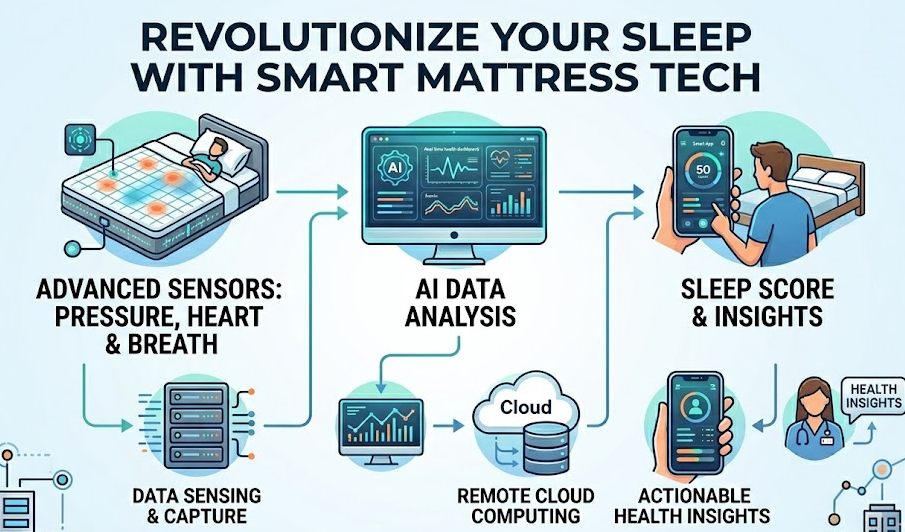
We've repeatedly tested this question during our quality control process. To be honest, AI itself won't directly make you sleep better, but it can help identify why you're sleeping poorly.
Last year we manufactured a product for a Nordic brand that incorporated pressure sensors and temperature regulation systems. User feedback showed that after one month of continuous use, 68% of people genuinely improved their sleep—but the key to improvement wasn't how sophisticated the AI algorithm was. It was the system alerting them that "mattress temperature is consistently too high" or "you always turn over 5+ times around 3 AM."
In other words, AI is like a 24/7 sleep consultant. It doesn't cure problems, but it accurately tells you where the problem is.
Our observation is: if you already sleep well and just want to try something new, AI features might bring less than 10% improvement. But if you've had chronic sleep issues without identifying the cause, this monitoring system's value could far exceed the mattress itself.
This question needs to be broken down. Through our OEM work across dozens of price points, we've found AI mattresses generally fall into three categories:
Entry-level ($1,200-$2,200): Mainly sleep monitoring + app recording, with average sensor accuracy and limited intelligent adjustment features. Honestly, at this price point, the "smart" content might not be as worthwhile as buying a professional smart ring plus a quality traditional mattress.
Mid-range ($2,200-$4,500): Adds zoned adjustment, temperature control, electric adjustment and other functions. This is what we consider the relatively reasonable value range, where hardware costs genuinely increase—it's not purely concept-driven pricing.
High-end ($4,500+): Complete AI system + subscription services + personalized customization. But here's the trap—many high-priced features you might not use three times a year.
Our advice to customers has always been straightforward: Don't pay for features you won't use. Some brands bundle a dozen AI functions, but in reality, 80% of users only utilize three of them.
This is our most frequently discussed internal question. As manufacturers, we're very aware of electronic component iteration speeds.
The biggest current risk is system compatibility. Last year, a longtime customer came asking why their 2019 smart mattress wouldn't connect to their new phone—the brand had long stopped maintaining and updating the old system. The mattress body could last another ten years, but the smart system had become useless.
After discussing with the Leizi team, we specifically emphasized one point in our ODM solutions: Core sleep functions cannot rely on cloud services. This means even if the brand goes bankrupt someday or servers shut down, the mattress's basic adjustment functions must still work. This is the most fundamental protection for consumers.
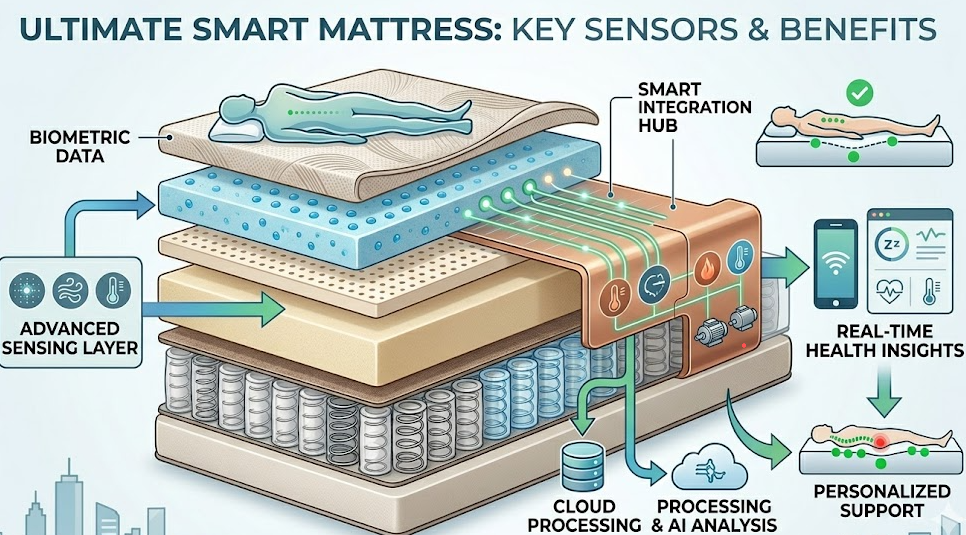
Few in the industry will proactively say this: the essence of a mattress is still "physical support," not a "data collection device."
We've seen too many cases of misplaced priorities at our factory. Some brands invest 90% of their R&D budget in AI algorithms while using the most ordinary grade of spring materials available. Users buy them home, stare at the app daily checking deep sleep duration, but don't realize their back pain is because the support layer density is inadequate.
Truly excellent smart mattresses should be "80% quality mattress + 20% well-calibrated intelligence," not the reverse. This is why when Leizi developed our smart product line, we insisted on first bringing latex layers, memory foam, and individually pocketed springs to the industry's top 15% level before adding smart modules on top.
Starting last year, we noticed more and more brands requesting "membership subscription" interfaces in their systems. The free version only shows basic data; if you want deep sleep analysis reports and personalized adjustment recommendations, pay another $15-45 monthly.
You spent $3,000 on the mattress, then need to pay another $180-540 annually ongoing—many people don't calculate this when purchasing.
When traditional mattresses break, you replace a spring or patch some foam. Smart mattresses? Our after-sales records show the most common issues are sensor drift, motor noise, and unstable app connections. These problems often require factory returns, with shipping plus repair easily exceeding a hundred dollars.
Which is more durable: a mattress integrating 12 sensors, 6 motors, WiFi module, and Bluetooth module, or one with just springs and foam? The answer is obvious. Our quality control department data shows smart mattresses have a 4-6 times higher repair rate within three years compared to traditional mattresses.
We conducted comparative testing on this question with our partner sleep laboratory. Comparing five mainstream AI mattresses with medical-grade polysomnography equipment, the results were:
Deep/Light Sleep Determination Accuracy: 65%-80% (medical-grade devices approach 95%)
Heart Rate Monitoring Error: ±5-8 beats/minute
Turn Count Statistics: Relatively high accuracy, reaching 85%+
In other words, this data can serve as reference but cannot replace medical diagnosis. If you have serious sleep disorders, you still need professional hospital testing—don't expect a mattress to solve the problem.
Our current recommendation to customers is: treat AI monitoring as a "sleep diary" for discovering habit issues (like consistently sleeping late on weekends or turning more with AC on). This value is tangible and real.
A few months ago, we received a memorable inquiry: a customer asked, "Will sleep data collected by the mattress be sold to insurance companies?"
This isn't unfounded paranoia. When interfacing with certain brands, we've actually seen clauses about "user data analysis and commercial applications." Your sleep quality, health status, nighttime activity patterns—if this information is misused, the consequences could be serious.
Leizi's approach on this is: All data prioritizes local storage, cloud syncing requires user authorization, and we absolutely will not sell data to third parties. This commitment will be written into product manuals and represents the baseline protection we as a manufacturer can offer consumers.
After communicating with industry stakeholders upstream and downstream, we have a somewhat different prediction: the future might not be "smart mattresses taking over everything," but rather "modular intelligence + quality base mattresses" coexisting.
What does this mean? Making smart features into detachable, upgradable independent modules. Want monitoring functions? Add a smart mattress cover. Want temperature adjustment? Insert a temperature-regulating pad layer. Don't need it anymore? Remove it anytime—the mattress body remains unaffected.
This avoids entire mattress obsolescence while giving users greater freedom of choice. We're already developing these types of ODM solutions for several brands, with market feedback better than expected.
Based on our production experience and user feedback, these functions genuinely provide value:
Zoned Support Adjustment: Especially for couples with significant weight differences or people with lumbar issues, this feature can notably improve comfort.
Temperature Regulation System: Constant temperature functions show obvious experience improvements in southern summers and northern winters, with relatively low failure rates.
Basic Sleep Monitoring: Doesn't need to be too complex; recording sleep duration, turn frequency, and general sleep stages is sufficient.
Quiet Electric Adjustment: Adjusting angles while reading or watching TV—this gets used more frequently than expected.
As for "AI voice control," "gesture sensing," and "ambient lighting," honestly these are icing on the cake, not necessities.
From our analysis, these groups have the highest satisfaction with smart mattresses:
People with chronic poor sleep quality but no organic issues—need data to help find causes
Those sensitive to sleep environments (heat/cold sensitive, high firmness requirements)—intelligent adjustment can precisely match needs
Tech enthusiasts willing to spend time researching and adjusting—can actually use the features rather than letting them collect dust
Well-budgeted families focused on quality of life—can accept the premium and afford ongoing maintenance costs
Conversely, if you already sleep well, have a limited budget, or dislike fiddling with electronics, we'll directly suggest buying a quality traditional mattress for better value.
After years in the mattress business, we increasingly believe this: Technology should serve sleep, not turn sleep into a technology testing ground.
AI smart mattresses certainly represent the industry's development direction, but they're not cure-alls. 2026 consumers need to view this more clearly: smart features are bonus points, not determining factors; data monitoring is a support tool, not a replacement for good sleep habits; no matter how well brands market, it comes back to the essential question: "Does this mattress actually feel comfortable when you lie on it?"
Leizi's logic over the years has been simple: first make the mattress itself excellent—materials, craftsmanship, durability, support all meeting high standards—then moderately add smart modules based on genuine user needs. We don't pursue the most features, but every feature we keep must pass repeated verification, ensuring it can still function stably five years later.
If you're considering buying a smart mattress, we suggest first clarifying: do you want improved sleep or a technology experience? If the former, please spend 80% of your budget on mattress quality. If the latter, remember to ask about after-sales policies, subscription fees, and system update commitments.
After all, no matter how smart the mattress, it can't beat a genuinely suitable mattress that fits your body and doesn't leave you with back pain every morning.
Related Reading:
[How to Choose the Right Mattress Firmness for Your Body]
[Pocket Spring Mattress vs Latex Mattresses: Real Comparison]
E-Mail-Formatfehler
emailCannotEmpty
emailDoesExist
pwdLetterLimtTip
inconsistentPwd
pwdLetterLimtTip
inconsistentPwd